Automatic Rope Testing MRT
Steel wire rope might be broken? Absolute assurance through MRT
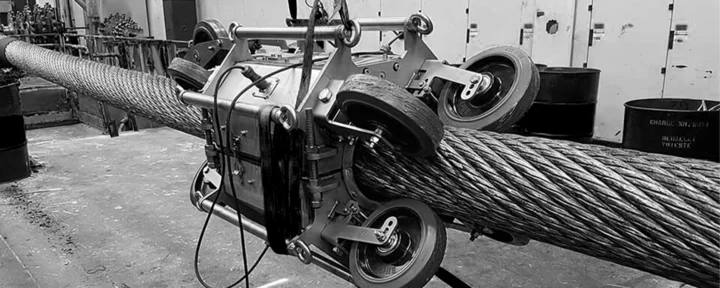
The MRT (Magnetic Rope Testing) method is a non-destructive, magnetic and non-contact process that can detect wire breaks, deformations and corrosion on steel wire ropes. With MRT, your steel wire ropes can now be inspected safely and with the highest accuracy on a digital level. In addition the rope is inspected from all sides and simultaneously from inside.
Visual Inspection vs. Magnetic Rope Testing
The visual inspection can be defined as the first assessment method for a correct metallic wire rope evaluation. The method consists in a deep look at the rope to search for deterioration modes and in reporting the results on a document. In all the updated versions of ISO4309, the visual inspection has always been considered the main or the only inspection tool, even if in the last releases the MRT is included. It must not be confused with a simple search for macro-defects, it is a very delicate and it should be performed by a competent person.
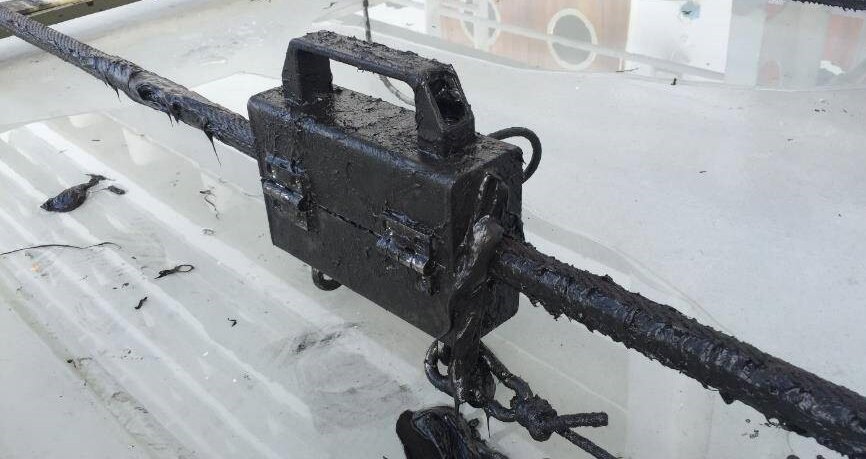
When is MRT suggested?
This picture shows a magnetic rope test in a marine environment. The whole rope was covered with lubricant and it was to perform an in-depth visual inspection. The visual inspector did not find any problems and the rope has been declared in good conditions but, when an MRT has been performed, it highlighted a different condition.